
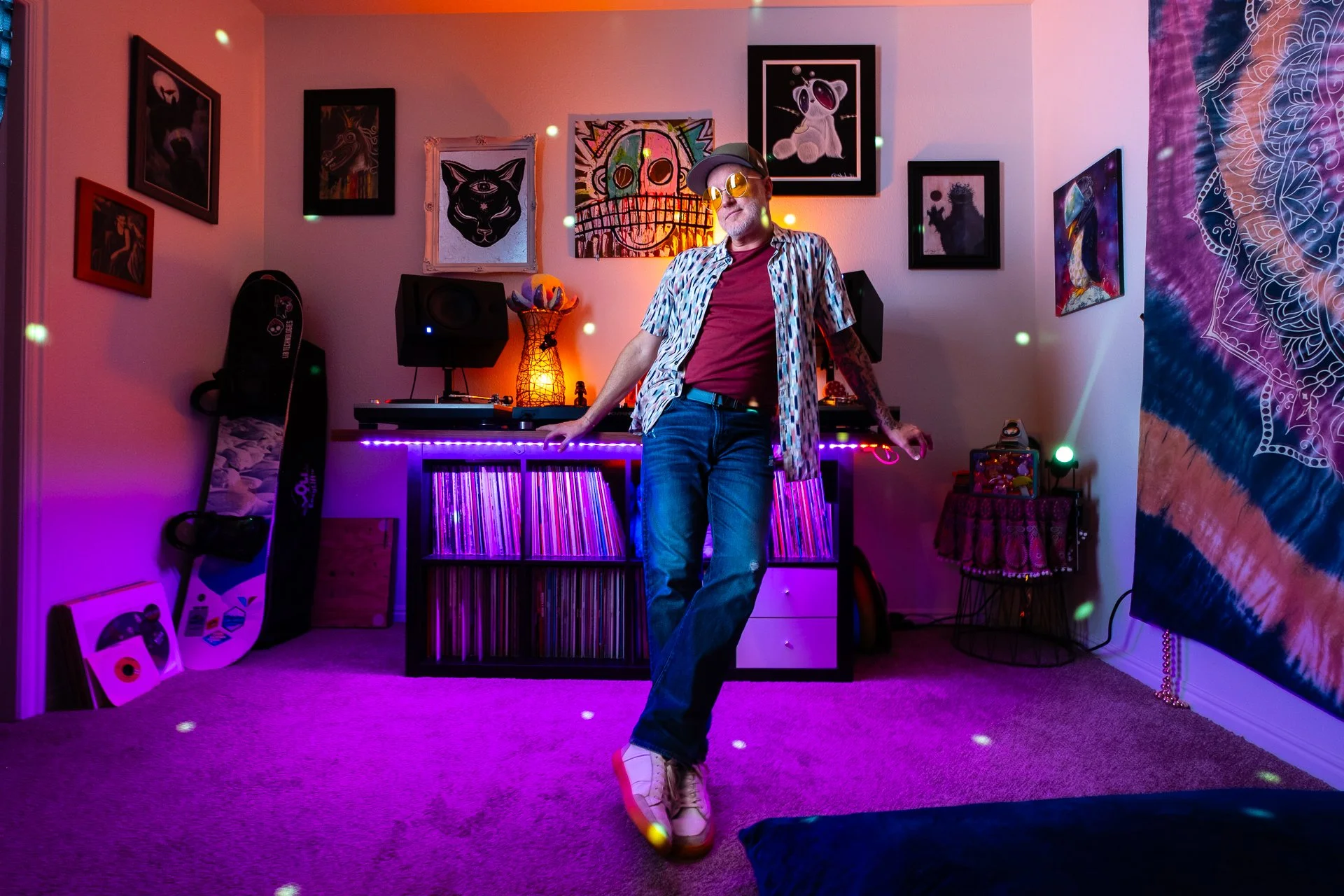
MODERN MAN
MODERN MANMasculinity is a fraught topic, sure to elicit images of the Manosphere, animalistic machismo, and performative acts of status signaling and dominance. These are extreme examples, and just a few of the different expressions of masculinity.
I’ve personally grappled with the existential uncertainty of what it means to be a man in the world today, but for me, traditional archetypes as depicted in popular culture feel not just limiting and reductive bordering on absurd, they also feel dismissive of a rich lived experience that is very different than what popular culture depicts as “manly.”
This project emerged from a feeling of exasperation that such an important cultural conversation was being driven by voices of anger and reactivity. Those narratives seemed counterproductive to my own desire to honestly examine modern masculinity and provide living examples of what emotionally complex, thoughtful, and pro-social men actually look like.
I set out to connect with other men who had the same questions and desires I did, and were willing to engage in conversations to reimagine the modern man. These conversations explored topics of emergent crises facing men today, such as loneliness, abuse, suicide, and education. The words and images on this page are the product of vulnerable and uncomfortable examinations of how personal experiences related to these topics have shaped these men into more emotionally intelligent, self-reflective, purposeful, and empowered human beings.
I’ve come to realize that over the course of time the emotional type of child I was, was stuffed down to conform to my dad’s belief of what a man was supposed to be like... There was a war inside myself to feel a certain way but then portray myself in a different way. I’m 52 now and I’m just barely getting to the point where I can get to and see the child that’s inside me and let him know that being in touch with my feelings, being able to express them, being able to cry without feeling shame or some sort of prideful something-or-other, it’s been amazing… To be healthy and well rounded as a man, or to [have] healthy masculinity, being able to process pain an loneliness, shame and grief, I think is key to being able to help yourself and other people. Those are the main things that, as men, we shy away from and we try to block out or act macho over, or treat as if they don’t affect us, but in reality they have every bit of power over us as any human being. I think admitting that is probably half the battle of changing how we look at ourselves as men.
ROCKY D
I think there's these societal things where if you're a man you shouldn't express how you feel, you shouldn't express vulnerability, but I think I'm like really lucky in my personal growth as a human [with] some of the things that I've been through, where expressing my emotions [and] asking for help and being vulnerable are cornerstones to my healing and growth on my own personal journey.
KENJI H
How do I define my masculinity? If I had to say one word, it would be balance. Because I'm masculine, I can build stuff, you know, but I'm also in touch with my feminine side. Like, I'll paint my nails, I'll have conversations, [I’m] able to understand feminine emotions and not just shove them off. It's not always going to be a 50-50 balance, but you have to find some balance and be comfortable being vulnerable.
AARON T
Matt: There's a prescribed set of emotions and feelings, behaviors that you have to conform to to be a man, right? You get trapped within a limited set of emotions and feelings that you can express, and they often don't include things like fear and uncertainty and things like that. A man's supposed to be certain and know what's going on and take control. And by doing that, by getting stuck in that box, because you're limited, it takes a toll on you. But the human experience is multifaceted, and we have to learn how to get in touch with our emotions and express those and be okay with uncertainty and feeling and sadness, not get trapped in that limited prescribed set of behaviors. Most men come to this realization by some sort of a crisis. Right? You reach a breaking point, you break down and finally, that crisis forces you to say, okay, I need help, I need to rethink how things are going.
Elias: it's the time afterwards that's the most important, how you choose to deal with it and what the next steps are. I remember when I was having my big crisis, I remember specifically asking to see someone, I was like “I want to see a therapist, I want to get better, I don't want this to happen again.” I feel like that's a mindset that [leads to] changes… but some people don't want to change. And that just perpetuates the cycle, and then eventually they'll maybe go through another crisis again. Maybe they'll change, or maybe they'll just recluse further back. Or they turn to drugs, alcohol, other things to just manage and to suppress those emotions and not deal with them.
MATT & ELIAS W
I don't see dominance as power; dominance is purely an aggressive way of avoiding - it is control, and it is manipulation. It's a way to hide parts of yourself from the world, potentially for fear of being seen as weak or incapable or soft. And to me, I think true power lies in the wisdom of knowing when to lead and when to be led. There's power in the humility of allowing yourself to be led by others, and there's a there's a power in knowing that you don't know, and a power in the willingness to say “I trust you,” whether that's with a partner, a colleague, or a friend, I think there's true power in that.
SEAN F
What would you be without the feminine side of you? The ability to show compassion and kindness and understand one another. Those are really important characteristics that are not to be diminished [as] feminine, they are just qualities of a good human being. I think people are all struggling with this balance within themselves of their yin and their yang, of their masculine and their feminine and I think that the more you can lean into understanding and balancing those things out within yourself, the better off you're going to be, the better version of yourself you're going to be.
THOMAS B
We don’t have the spaces for men to express themselves, we haven’t provided the teaching for them to express themselves in a way that is outward. [Society] has to be patient and kind enough to allow them to express themselves in a way that they see fit and not try to put them into a box or put a square peg in a round hole; people have to be ok with letting them express themselves in a way that is true to who they are.
THOMAS S